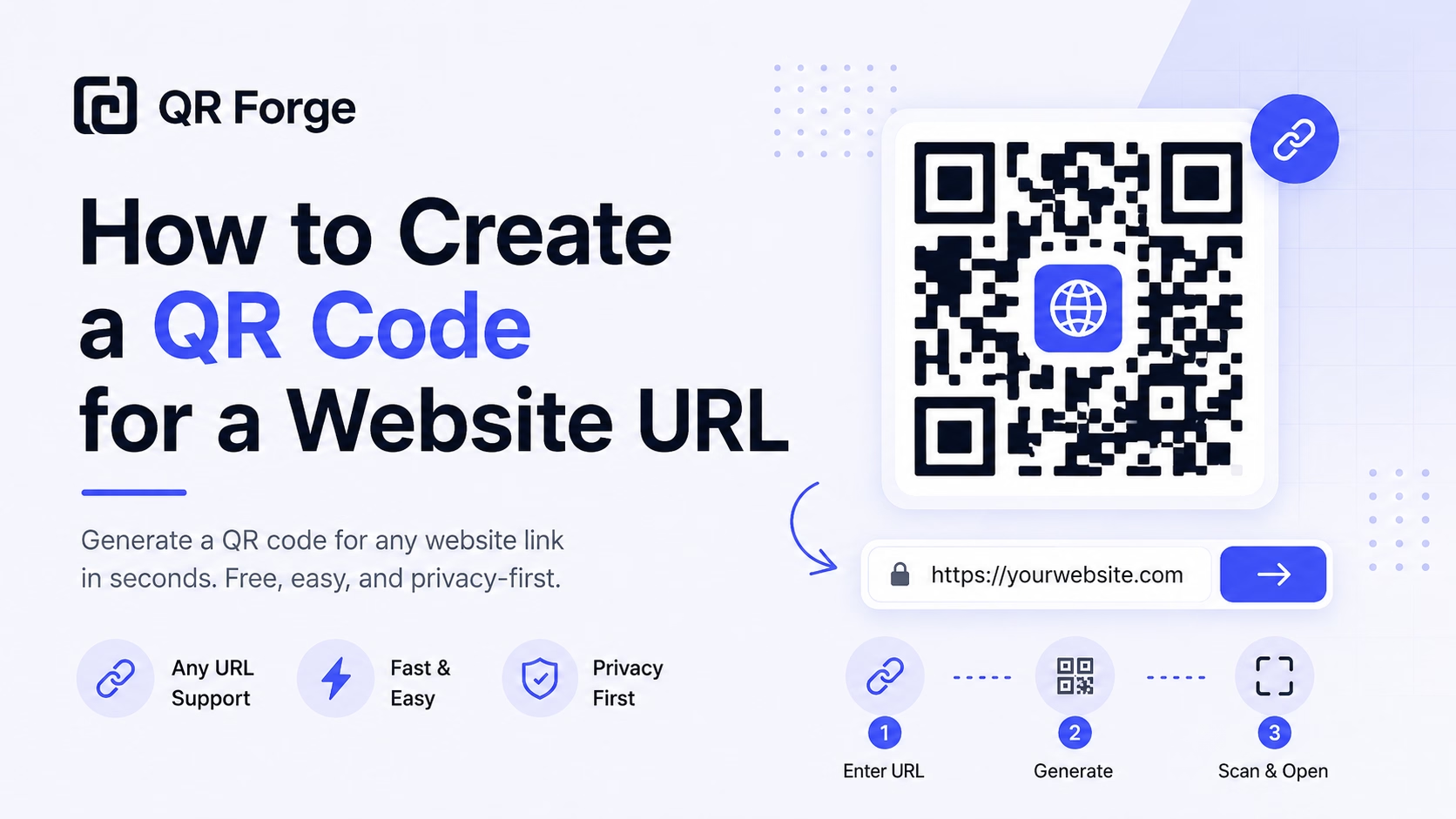
A URL QR code turns a website link into a scannable code. Instead of asking someone to type a long address, you can place the QR code on a screen, flyer, business card, menu, poster, or product package.
When someone scans it with a phone, the website opens instantly.
This guide shows you how to create a QR code for a website URL, how to test it, where to use it, and what mistakes to avoid before publishing or printing.
Create a website QR code
Generate a static QR code for any website URL directly in your browser.
What is a URL QR code?
A URL QR code is a QR code that opens a web address after scanning.
The encoded data is usually a link such as:
https://example.com
When someone scans the QR code, their phone camera reads the pattern, detects the URL, and offers to open it in a browser.
Common names for URL QR codes
People may describe the same thing using different terms:
- website QR code
- link QR code
- web QR code
- URL QR code
- landing page QR code
- QR code for a website
They all usually mean the same core idea: a QR code that opens a link.
What a URL QR code can open
A website QR code can point to many types of online destinations:
- homepages
- landing pages
- product pages
- restaurant menus
- signup forms
- booking pages
- portfolio pages
- social profiles
- online documents
- support pages
- review pages
- event pages
The QR code itself does not host the content. It simply opens the URL you provide.
When should you use a website QR code?
Use a website QR code when you want to connect offline or visual materials to an online page.
It is useful when typing the link manually would be slow, annoying, or easy to get wrong.
Use it for printed materials
A URL QR code works well on:
- flyers
- posters
- brochures
- product packaging
- menus
- business cards
- event banners
- table tents
- signs
- stickers
Printed materials are one of the most common use cases because QR codes make offline-to-online navigation easier.
Use it for digital materials
A website QR code can also be useful in digital contexts, such as:
- presentation slides
- digital posters
- PDFs
- online event screens
- classroom materials
- webinar slides
- video overlays
Even when a link is clickable, a QR code can help people open it on a second device.
How to create a QR code for a URL
Creating a website QR code is straightforward. The most important step is making sure the URL is correct before generating and sharing the QR code.
Step 1: Choose the final URL
Start with the exact page you want people to visit.
For example:
https://example.com/menu
Avoid using a generic homepage if people expect a specific page. A QR code should send users directly to the most relevant destination.
Step 2: Check that the URL works
Open the link in a browser before creating the QR code.
Make sure:
- the page loads correctly
- the link uses
https - the page is public
- the page works on mobile
- the destination is not blocked
- the page content matches the QR code context
This simple check prevents many QR code problems later.
Step 3: Generate the QR code
Open the URL QR code generator, paste your link, and generate the QR code.
With QR Forge, the QR code is generated in your browser. You do not need to create an account just to make a static URL QR code.
Step 4: Download the QR code
After generating the QR code, download it in the format you need.
For most simple use cases, PNG works well. For design and print workflows, SVG can be useful because it scales cleanly.
Step 5: Test the QR code
Before you publish or print the QR code, scan it with a phone.
Do not skip this step. A QR code can look fine visually but still fail if the URL is wrong, the image is too small, or the destination does not load properly.
Always test the QR code at the final size. If you plan to print it on a business card, flyer, or poster, print a test copy and scan the physical version.
What URL should you put in a QR code?
The best URL is the one that sends users directly to what they expect.
A QR code should reduce friction, not add confusion.
Use a specific destination
If the QR code is on a restaurant table, link directly to the menu.
If it is on a product box, link directly to the product guide or support page.
If it is on a business card, link to a portfolio, contact page, or digital business card.
Avoid unnecessary redirects
A redirect is not always bad, but too many redirects can slow down the experience and make troubleshooting harder.
If privacy and reliability matter, use the final destination URL when possible.
Prefer mobile-friendly pages
Most QR codes are scanned with phones. That means the destination should work well on a small screen.
Before publishing, check the page on a mobile device.
Should you use a short link?
Short links can be useful, but they are not always necessary.
A short link can make the QR code less dense because fewer characters need to be encoded. A simpler QR pattern can be easier to scan, especially at small sizes.
Benefits of short links
Short links may help when:
- the original URL is very long
- the QR code will be printed small
- the link needs to be easier to type manually
- campaign tracking is required
- the destination may change through a redirect service
Trade-offs of short links
Short links also add another dependency.
A short link may stop working if:
- the short link service disables it
- the account is closed
- the redirect is changed
- the service has downtime
- the short URL looks suspicious to users
For a simple privacy-first QR code, using the final URL directly is often the cleaner option.
Static vs dynamic URL QR codes
A website QR code can be static or dynamic.
A static URL QR code stores the final URL directly inside the QR code. A dynamic URL QR code usually stores a redirect link that can be changed later from a provider dashboard.
Static URL QR code
A static URL QR code is simple and direct.
It is a good choice when:
- the URL is final
- the page is stable
- you do not need scan analytics
- you do not need to edit the destination later
- you want a privacy-friendly QR code
- you do not want a third-party redirect layer
Dynamic URL QR code
A dynamic URL QR code is more flexible.
It may be useful when:
- the destination may change
- you need scan analytics
- the QR code is part of a campaign
- you are printing a large batch
- you need dashboard-based management
- you want to track offline marketing performance
Which one should you choose?
Choose static when the link is stable and you want a simple QR code.
Choose dynamic when editing and analytics are more important than simplicity.
For many everyday uses, a static URL QR code is enough.
Best places to use a URL QR code
A URL QR code is flexible because almost every online destination has a link.
Here are common use cases.
Business cards
A QR code on a business card can open a portfolio, contact page, booking page, LinkedIn profile, or digital business card.
This is useful when you want people to take action after meeting you.
Flyers and posters
Flyers and posters can use QR codes to send people to event pages, product pages, signup forms, or promotional landing pages.
Make the QR code large enough for the scanning distance.
Restaurant menus
A QR code can open a digital menu. This is useful for cafes, restaurants, food trucks, hotels, and events.
Make sure the menu page loads quickly and works well on mobile.
Product packaging
Packaging QR codes can open instructions, warranty pages, registration forms, ingredient details, or support pages.
For packaging, test the QR code on the actual material and surface.
Presentations and slides
A QR code on a presentation slide can help the audience open a resource page, survey, signup form, or downloadable file.
Keep it visible long enough for people to scan.
Email signatures and documents
A QR code can be added to a PDF, proposal, report, or email signature to direct people to a profile, landing page, or support page.
For digital documents, make sure the QR code does not replace normal clickable links. Use both when possible.
How to test a website QR code
Testing is one of the most important parts of creating a QR code.
A few minutes of testing can prevent broken links, failed scans, and bad user experiences.
Test with multiple phones
Scan the QR code with more than one device if possible.
Test with:
- iPhone camera
- Android camera
- a QR scanner app if relevant
- different browsers
- different lighting conditions
Test the final destination
After scanning, check the page itself.
Make sure:
- the page loads quickly
- the page is mobile-friendly
- the destination is correct
- the call to action is clear
- forms or buttons work
- the page does not show unexpected errors
Test the printed version
If the QR code will be printed, test it after printing.
A QR code that scans on your screen may fail on paper if it is too small, blurry, low contrast, or printed on a reflective surface.
Common mistakes to avoid
Most URL QR code problems come from simple mistakes.
Using the wrong URL
Copying the wrong link is easy. Always open and test the URL before generating the QR code.
Linking to a desktop-only page
A QR code is usually scanned on mobile. If the page is hard to use on a phone, the QR code experience will feel broken even if the code scans correctly.
Making the QR code too small
Small QR codes are harder to scan, especially on print materials.
The right size depends on where the QR code appears and how far away people will scan it.
Using low contrast
A QR code should have strong contrast between the foreground and background. Black on white is the safest choice.
Avoid light gray QR codes, busy backgrounds, and colors that are too similar.
Removing the quiet zone
The quiet zone is the empty space around the QR code. Without it, scanners may have trouble detecting the code.
Keep the area around the QR code clean.
Compressing the image too much
Heavy compression can blur the QR pattern. This is especially risky when using JPEG or exporting through design tools.
For clean results, use a high-quality export format.
URL QR code best practices
A good URL QR code should be easy to scan and useful after scanning.
Send users to the right page
The destination should match the context.
If the QR code says “View menu,” it should open the menu. If it says “Book now,” it should open a booking page.
Add a clear call to action
Do not place a QR code alone without context.
Add a short instruction such as:
- Scan to view the menu
- Scan to visit our website
- Scan to book an appointment
- Scan to download the guide
- Scan to leave a review
- Scan to open the product page
Keep the design simple
QR codes can be styled, but readability matters first.
Avoid over-designing the code with too many colors, shapes, logos, gradients, or decorative elements.
Use enough size and spacing
Make sure the QR code is large enough for its environment.
A code on a business card can be smaller than a code on a poster, but both still need enough white space and contrast.
Test before publishing
Testing should be part of your workflow every time.
Scan the QR code before sharing it digitally or sending it to print.
Can a URL QR code work offline?
A URL QR code can be scanned offline, but opening the website requires an internet connection.
The QR code itself only stores the URL. If the scanner does not have internet access, the device may detect the link but fail to load the page.
Offline-friendly alternatives
If you need the QR code to work without internet, consider using another QR code type, such as:
- text QR code
- WiFi QR code
- vCard QR code
These can store useful information directly inside the QR code.
Why use QR Forge for URL QR codes?
QR Forge is built for simple, privacy-first QR code generation.
You can create a website QR code without unnecessary friction.
No login required
You do not need to create an account just to generate a static URL QR code.
No backend required for generation
QR Forge is designed around client-side generation, so the QR code can be created directly in your browser.
No watermark
Your generated QR code does not need a QR Forge watermark.
No forced tracking
QR Forge focuses on static QR codes. That means there is no built-in scan tracking or forced redirect layer for basic generation.
Create a URL QR code the right way
Creating a QR code for a website URL is easy, but a good QR code still needs planning.
Choose the right destination, generate the code, test it on a phone, and make sure it works in the real environment where people will scan it.
Final checklist
Before publishing, confirm that:
- the URL is correct
- the page works on mobile
- the QR code scans reliably
- the code has enough contrast
- the quiet zone is preserved
- the printed size is large enough
- the call to action is clear
- the destination matches user expectations
A well-made URL QR code should feel effortless. Someone scans it, lands on the right page, and knows what to do next.
Create a free URL QR code
Generate a privacy-first QR code for any website URL with QR Forge. No login, no watermark, no backend required.