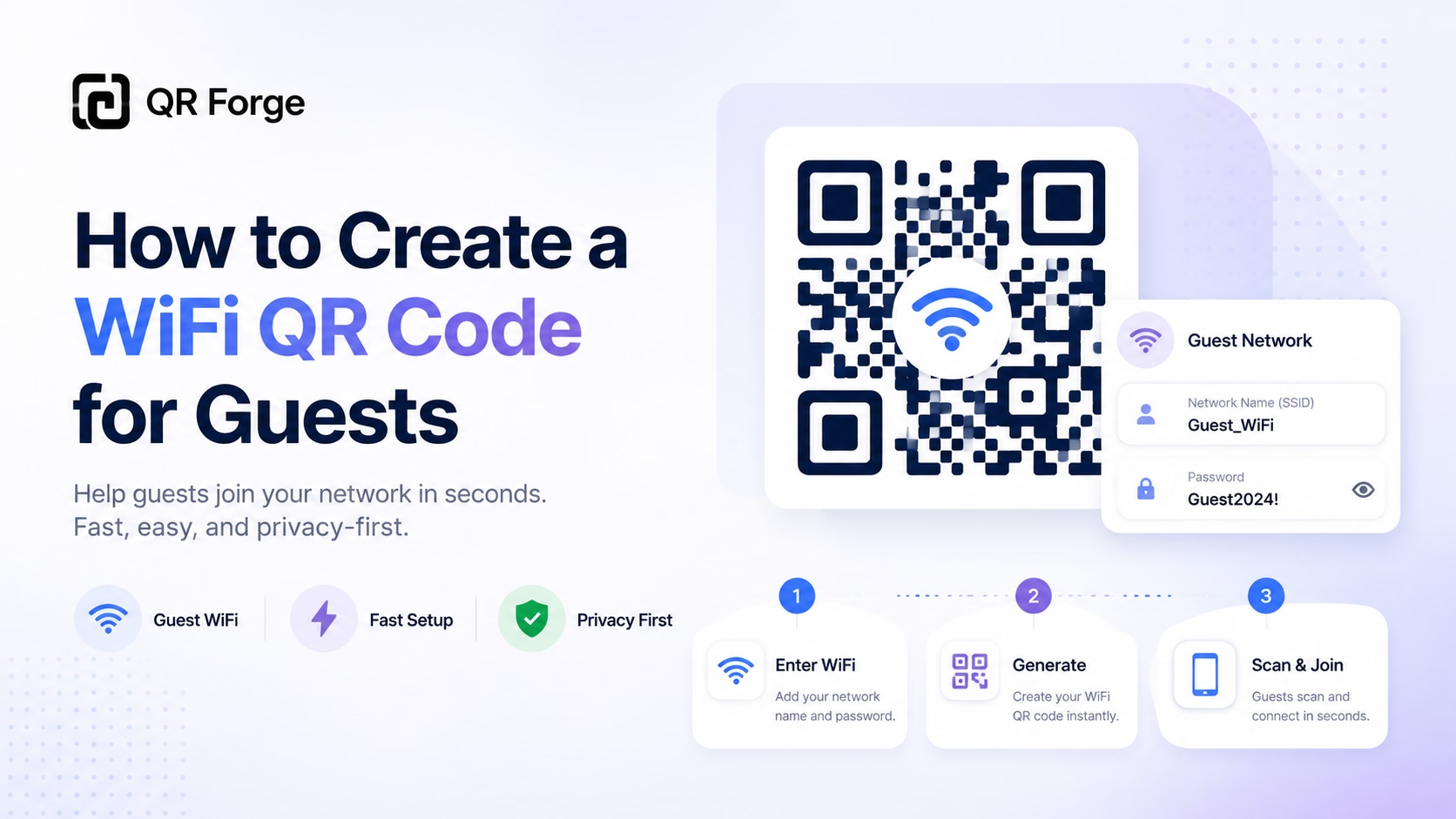
A WiFi QR code lets guests connect to your network by scanning a code instead of typing the password manually.
This is useful at home, in cafes, hotels, offices, coworking spaces, clinics, classrooms, rental properties, and events. Instead of repeating the WiFi name and password, you can place one QR code where guests can scan it.
This guide explains how WiFi QR codes work, how to create one, how to test it, and how to use it safely.
Create a WiFi QR code
Generate a guest WiFi QR code in your browser without login, watermark, or backend storage.
What is a WiFi QR code?
A WiFi QR code is a QR code that stores the information needed to join a wireless network.
When someone scans it with a compatible phone, the device can read the network details and show a prompt to connect.
What information is inside a WiFi QR code?
A WiFi QR code usually contains:
- network name
- password
- security type
- hidden network setting, if needed
The most common security types are WPA/WPA2, WEP, or no password. Most modern home and business networks use WPA or WPA2.
What happens when someone scans it?
When a guest scans the WiFi QR code, their phone reads the network details and asks whether they want to join.
They do not need to type the WiFi password manually. This makes the process faster and reduces mistakes.
Why use a WiFi QR code?
WiFi passwords are often long, hard to read, and easy to mistype. A QR code makes guest access simpler.
It saves time
Instead of spelling out the password or writing it repeatedly, guests can scan once and connect.
This is especially useful when many people need access, such as at a cafe, event, meeting room, or hotel lobby.
It reduces typing errors
WiFi passwords often contain uppercase letters, numbers, and symbols. A small typo can prevent connection.
A QR code removes most of that friction.
It improves the guest experience
A clear WiFi QR code feels more professional than a handwritten password on paper.
It helps guests connect quickly without asking staff or hosts for help.
When should you use a WiFi QR code?
A WiFi QR code is useful whenever people need temporary or convenient network access.
Homes and apartments
You can place a WiFi QR code in a living room, guest room, or near the router so visitors can connect easily.
This is helpful when friends, family, or short-term guests visit.
Cafes and restaurants
Cafes and restaurants can place a guest WiFi QR code near the counter, on tables, or on menu cards.
Guests can connect without asking staff for the password.
Hotels and guest houses
A WiFi QR code can be placed in rooms, welcome cards, lobbies, or check-in areas.
This makes arrival smoother for guests.
Offices and meeting rooms
Offices can use WiFi QR codes for meeting rooms, reception areas, training spaces, and visitor zones.
For security, use a separate guest network instead of the internal company network.
Events and classrooms
Events, workshops, and classrooms often have many people joining the same network. A printed WiFi QR code can make setup faster.
How to create a WiFi QR code
Creating a WiFi QR code is simple, but accuracy matters. If the network name, password, or security type is wrong, the code may not connect properly.
Step 1: Find your WiFi network name
The network name is also called the SSID.
Make sure you copy it exactly. WiFi names are case-sensitive, so uppercase and lowercase letters matter.
Step 2: Check the WiFi password
Copy the password carefully.
Watch for:
- uppercase letters
- lowercase letters
- numbers
- spaces
- special characters
- similar-looking characters like 0 and O
A single wrong character can make the QR code fail.
Step 3: Choose the security type
Most modern networks use WPA or WPA2.
If you are not sure, check your router settings or the WiFi information on a device that is already connected.
Step 4: Generate the QR code
Open the WiFi QR code generator, enter the network details, and generate the QR code.
With QR Forge, the QR code is generated in your browser. You do not need to create an account just to make a guest WiFi QR code.
Step 5: Download the QR code
Download the generated QR code and use it on a printed sign, card, document, or digital display.
Make sure the QR code is large enough and has strong contrast.
Step 6: Test before sharing
Scan the QR code with a phone before placing it in public or giving it to guests.
Testing helps catch mistakes before other people try to use it.
Test your WiFi QR code with a device that is not already connected to the network. This gives you a more accurate result.
How to test a WiFi QR code
Testing is important because WiFi QR codes depend on exact network details.
A QR code may scan correctly but still fail to connect if the password or security type is wrong.
Test with iPhone
Open the Camera app and point it at the QR code.
If the code is valid, the iPhone should show a prompt to join the WiFi network. Tap the prompt and confirm the connection.
Test with Android
Many Android phones can scan WiFi QR codes with the camera app or built-in QR scanner.
Some devices may also support QR scanning inside WiFi settings.
Test with multiple devices
If possible, test with more than one device.
Use:
- an iPhone
- an Android phone
- a newer device
- an older device
- a device not already connected to the network
This helps confirm the QR code works for different guests.
Where to place a WiFi QR code
The best placement depends on where guests need access.
At home
Good places include:
- guest room
- living room
- entry table
- home office
- near the router
Avoid placing the code somewhere visible from outside if it connects to your private network.
In a cafe or restaurant
Good places include:
- table tents
- menu cards
- checkout counter
- wall signage
- receipt area
Make sure the code is not too small, especially if it is printed on a menu or table card.
In a hotel or rental property
Good places include:
- welcome card
- bedside table
- room information sheet
- reception desk
- lobby signage
Guests should be able to find it without asking.
In an office
Good places include:
- reception area
- meeting rooms
- visitor desk
- training rooms
Use a guest network whenever possible.
WiFi QR code security tips
A WiFi QR code is convenient, but you should still think about security.
Anyone who can scan the code can potentially access the network details.
Use a guest network
The safest approach is to create a separate guest WiFi network.
A guest network keeps visitors away from private devices, internal systems, printers, file shares, and business tools.
Do not post private WiFi publicly
Avoid placing your main home or business WiFi QR code in public areas.
If the code is visible to anyone, treat the password as shared.
Change the password when needed
If a WiFi QR code has been shared too widely, change the guest network password and generate a new QR code.
This is especially important for offices, rentals, events, and public-facing businesses.
Keep the QR code controlled
Place the QR code where intended guests can access it, but random passersby cannot easily scan it.
For example, inside a cafe is better than on a window facing the street.
Should you use your main WiFi or guest WiFi?
In most cases, use a guest WiFi network.
A guest network is designed for visitors. It gives people internet access without giving them full access to your private network.
Use guest WiFi for visitors
Guest WiFi is best for:
- cafes
- hotels
- offices
- events
- rental properties
- clinics
- classrooms
- coworking spaces
Keep private WiFi private
Your main network may connect to personal or business devices such as laptops, printers, storage devices, smart home tools, and internal systems.
Do not share it widely unless you are comfortable with that level of access.
Common WiFi QR code mistakes
Most WiFi QR code issues come from small setup errors.
Wrong network name
The network name must match exactly. Even a small difference in capitalization can cause problems.
Wrong password
A typo in the password is one of the most common reasons a WiFi QR code fails.
Copy the password carefully and test the code before sharing.
Wrong security type
If the security type does not match the network, some devices may not connect properly.
When in doubt, check the router or connected device settings.
QR code is too small
A small QR code may be hard to scan, especially when printed on a small card or placed far from guests.
Use a larger size for wall signs and table displays.
Poor contrast
A QR code should have strong contrast. Black on white is the most reliable option.
Avoid light colors, busy backgrounds, and low-contrast designs.
WiFi QR code design best practices
A WiFi QR code should be easy to find, easy to scan, and easy to understand.
Add a clear title
Use a simple title such as:
Scan to Join WiFi
This tells guests what the QR code does.
Include the network name
It is helpful to show the network name near the QR code so guests know which WiFi network they are joining.
You do not need to display the password if the QR code already contains it.
Keep enough white space
Leave enough empty space around the QR code.
Do not place text, icons, or borders too close to the pattern.
Print at a readable size
For table cards, a small but clear QR code may work. For wall signs, make it larger because guests may scan from farther away.
Test the printed version
Always test the final printed QR code, not only the digital preview.
Print quality, paper texture, size, and lighting can affect scanning.
Can a WiFi QR code work without internet?
A WiFi QR code can be scanned without internet, but the network connection still depends on the WiFi itself.
The QR code contains the network details. The phone reads those details and tries to join the network.
What works offline
The QR code can still display the network information to the phone without mobile data.
What needs the network
After joining the WiFi network, internet access depends on whether that network is connected to the internet.
If the router has no internet connection, the phone may join WiFi but still be unable to browse.
Does a WiFi QR code expose the password?
Yes, a WiFi QR code can expose the network details to people who can scan or decode it.
That is why placement matters.
Treat it like a shared password
A WiFi QR code should be treated like the password itself.
If someone can scan it, they can potentially join the network.
Use guest access for safety
For businesses and public spaces, use a guest network and limit access to private systems.
This keeps convenience without exposing your main network.
Why use QR Forge for WiFi QR codes?
QR Forge is designed for simple, privacy-first QR code generation.
That matters for WiFi QR codes because the data can include a network password.
Client-side generation
QR Forge is designed to generate QR codes in your browser. The goal is to avoid unnecessary backend storage for basic QR generation.
No login required
You do not need to create an account just to generate a WiFi QR code.
No watermark
QR Forge does not add a watermark to the generated QR code.
No forced tracking
A WiFi QR code does not need scan analytics to be useful. QR Forge focuses on simple static QR codes without a built-in tracking layer.
Create a WiFi QR code the right way
A WiFi QR code is one of the most practical QR code types. It saves time, avoids typing errors, and makes guest access easier.
But it should be used thoughtfully.
Final checklist
Before sharing your WiFi QR code, confirm that:
- the network name is correct
- the password is correct
- the security type is correct
- the QR code scans on iPhone and Android
- the printed version is readable
- the QR code has enough contrast
- the placement is appropriate
- the network is safe to share
- a guest network is used when possible
A good WiFi QR code should make connection simple without exposing more access than necessary.
Create a free WiFi QR code
Generate a guest WiFi QR code with QR Forge. No login, no watermark, and no backend storage required for basic generation.