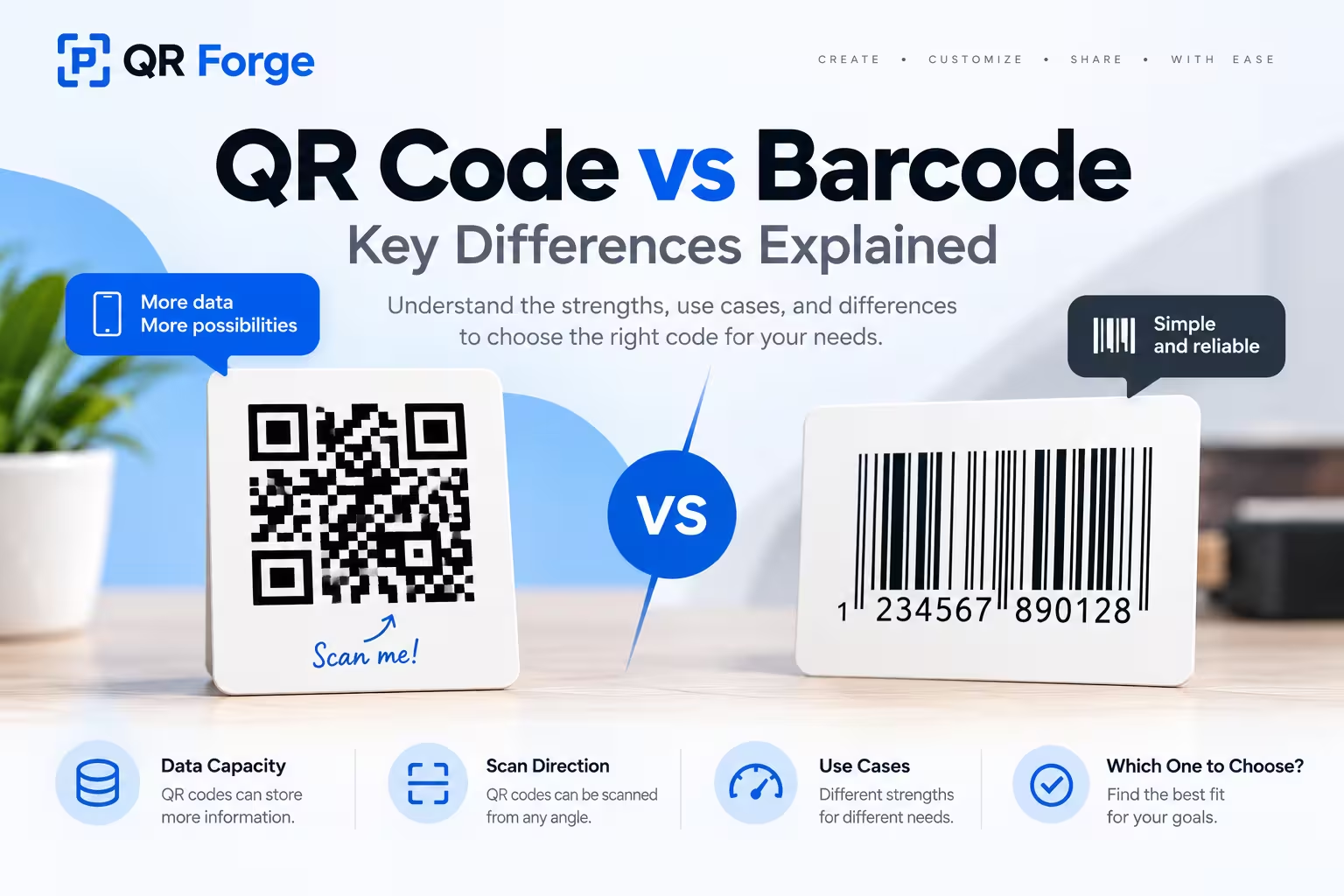
QR codes and traditional barcodes both store information in machine-readable patterns, but they are designed for different jobs.
A barcode is commonly used to identify products, inventory, tickets, and assets. A QR code can also identify things, but it is especially useful for connecting physical materials to digital actions such as opening a website, joining WiFi, saving contact information, or starting a chat.
This guide explains the key differences between QR codes and barcodes so you can understand when each format makes sense.
Create a QR code
Turn a website, text, WiFi network, or contact detail into a scannable QR code.
QR code vs barcode at a glance
The simplest difference is how the data is arranged.
Traditional barcode
A traditional barcode uses a series of parallel lines and spaces. The scanner reads the pattern across one primary direction.
QR code
A QR code uses a square grid of dark and light modules. It stores information across both horizontal and vertical directions.
Quick comparison
| Feature | QR Code | Traditional Barcode |
|---|---|---|
| Data layout | Two-dimensional | One-dimensional |
| Typical shape | Square | Rectangular |
| Data capacity | Higher | Lower |
| Phone camera scanning | Common | Varies |
| Website links | Well suited | Less common |
| Product identification | Possible | Very common |
| Inventory systems | Possible | Very common |
| Consumer marketing | Very common | Less common |
What is a barcode?
A barcode is a machine-readable representation of data.
Common barcode types
Examples include UPC, EAN, Code 39, Code 128, and ITF.
What barcodes usually store
Traditional barcodes often store a short identifier rather than a large amount of information. A retail barcode may identify a product number that a point-of-sale system uses to look up a database record.
Where barcodes are used
Barcodes are common in retail, inventory, warehouses, shipping, manufacturing, libraries, tickets, and logistics.
What is a QR code?
A QR code is a two-dimensional barcode.
What QR codes can contain
A QR code can encode:
- website URLs
- plain text
- WiFi credentials
- contact information
- phone numbers
- email addresses
- WhatsApp links
- locations
- calendar information
Where QR codes are used
QR codes commonly appear on posters, flyers, business cards, menus, packaging, receipts, event signs, presentations, and WiFi signs.
Are QR codes barcodes?
Yes. A QR code is a type of barcode.
One-dimensional barcodes
One-dimensional barcodes store data primarily along one direction using bars and spaces.
Two-dimensional barcodes
Two-dimensional codes store data across a grid.
QR codes are one of the most familiar examples.
Every QR code is a type of barcode, but not every barcode is a QR code.
Difference in data capacity
QR codes can generally store more information than traditional one-dimensional barcodes.
Barcodes are efficient identifiers
Many traditional barcodes only need to store a compact product, asset, or tracking identifier.
QR codes can store richer data
Because QR codes use two dimensions, they are practical for URLs, contact details, WiFi information, and other direct actions.
More data means more density
A QR code containing more information becomes visually denser. Dense codes may need a larger printed size for reliable scanning.
Difference in shape and design
Traditional barcodes are usually rectangular and use parallel bars.
QR codes are usually square and use small modules arranged around distinctive finder patterns.
Why this matters
The square layout allows QR codes to carry more information and makes them suitable for flexible smartphone scanning.
Difference in scanning
The scanning experience often depends on the environment.
Traditional barcode scanners
Retail and warehouse systems commonly use dedicated scanners optimized for fast barcode reading.
QR code scanning
Modern smartphones commonly recognize QR codes with the built-in camera.
Consumer use
QR codes are convenient when ordinary customers are expected to scan without specialized hardware.
Difference in scan orientation
QR codes are usually more forgiving about orientation.
Barcode alignment
Traditional one-dimensional barcodes often work best when presented in a suitable orientation to the scanner.
QR code orientation
QR codes use finder patterns that help the scanner recognize orientation, so users usually do not need to align their phones precisely.
Difference in error correction
QR codes include built-in error correction.
Why it matters
This can help a QR code remain readable when part of it is slightly damaged, dirty, or obscured.
Barcode validation
Traditional barcode standards may use check digits or other validation mechanisms, but they work differently from QR error correction.
QR codes vs barcodes for retail
Retail is strongly associated with traditional barcodes.
Product identification
UPC and EAN barcodes are widely used for point-of-sale product identification.
QR codes for customers
A package can also include a QR code that links to:
- instructions
- product details
- warranty registration
- support
- videos
- promotions
They can work together
The traditional barcode can support checkout while the QR code supports customer-facing information.
QR codes vs barcodes for inventory
Traditional barcodes are highly practical for inventory systems.
Why barcodes remain common
They are standardized, compact, fast to scan, and supported by established hardware and software.
When QR codes help
QR codes can be useful when more information needs to be encoded or when mobile phones are used as scanners.
QR codes vs barcodes for marketing
QR codes are usually more practical for consumer marketing.
Easy smartphone access
Customers can scan with a phone camera and immediately open the intended destination.
Common marketing destinations
Examples include landing pages, social profiles, event registration, menus, product pages, and support pages.
Use a call to action
Tell the user what will happen after scanning, such as:
Scan to view the offer
QR codes vs barcodes for business cards
A QR code is much more useful than a traditional retail-style barcode on most business cards.
vCard QR code
A vCard QR code can help the recipient save your contact details.
Website QR code
A URL QR code can open your portfolio or website.
WhatsApp QR code
A WhatsApp QR code can start a conversation.
See how to use QR codes on business cards for more detail.
QR codes vs barcodes for product packaging
Packaging can benefit from both.
Barcode role
A traditional barcode can identify the product for store and inventory systems.
QR code role
A QR code can provide customer-facing content such as manuals, recipes, support, registration, or recycling information.
Do not replace required standards casually
If a retailer or supply chain requires a particular barcode format, a QR code is not automatically a substitute.
Which format stores more information?
QR codes generally store more information.
Why
They encode data across a two-dimensional matrix rather than only one direction.
More is not always better
For a short product identifier, a traditional barcode may be exactly what the system needs.
Which is easier to scan?
It depends on the context.
Dedicated hardware
Traditional barcodes can be extremely fast in retail and warehouse systems with purpose-built scanners.
Smartphones
QR codes are usually easier for public smartphone scanning.
Print quality matters for both
A poorly printed, damaged, or low-contrast code can fail regardless of format.
Which is better for smartphones?
QR codes are generally better suited to consumer smartphone workflows.
Built-in support
Modern phones commonly recognize QR codes with the camera.
Immediate actions
A QR code can open a URL, WiFi network, contact record, or other supported action directly.
Which is better for printing?
Both formats can work well in print.
Traditional barcodes
They are widely used on product labels and packaging.
QR codes
They work well on posters, flyers, menus, cards, signs, and packaging.
For QR print sizing, see the QR code size guide.
QR code vs barcode security
Neither format is automatically secure.
Barcode security
A barcode identifier can be copied if someone can read or reproduce it. Security normally comes from the system validating the identifier.
QR code security
A QR code can point to a legitimate website or a malicious one. The QR pattern itself does not guarantee trust.
Secure the system, not the pattern
Authentication, permissions, signatures, and server-side validation should provide real security where needed.
QR code vs barcode privacy
Privacy depends on the data and surrounding system.
Static QR codes
A static QR code can store its final destination directly without requiring a tracking redirect.
Dynamic QR codes
Dynamic platforms may collect scan analytics depending on the provider.
Traditional barcodes
The printed identifier may be simple, while the connected retail or inventory system records scan activity.
Can a barcode be replaced by a QR code?
Sometimes, but not automatically.
Standards matter
Retailers, warehouses, and logistics systems may require UPC, EAN, Code 128, or another specific standard.
QR codes can complement barcodes
A common model is:
Traditional barcode = operational identification
QR code = customer-facing digital information
Can a QR code be replaced by a barcode?
For some short identifiers, yes.
But a traditional barcode is generally less convenient for consumer actions such as joining WiFi, opening a website, or saving a contact.
QR code vs barcode: which should you choose?
Choose based on the workflow.
Choose a traditional barcode when
You need:
- standardized retail identification
- point-of-sale compatibility
- established warehouse scanning
- inventory labels
- logistics tracking
- dedicated scanner workflows
Choose a QR code when
You want users to:
- open a website
- join WiFi
- save contact information
- start a WhatsApp chat
- access a menu
- view a product page
- register for an event
- access digital instructions
Use both when appropriate
They can solve different problems on the same product or material.
QR code and barcode checklist
Use a QR code if
- the audience uses smartphones
- the destination is digital
- you need more data capacity
- you want easy consumer scanning
- you want to encode contact, WiFi, or URL data
Use a traditional barcode if
- a retailer requires it
- an inventory system expects it
- you use dedicated scanners
- you need standardized product identification
Before printing either format
- verify the encoded data
- use strong contrast
- choose an adequate size
- preserve required margins
- test the final print
- test with the actual scanner or phone
QR code vs barcode: final comparison
Traditional barcodes remain highly useful for retail, inventory, logistics, and standardized identification.
QR codes are more flexible for smartphone users and digital actions because they can carry richer information and connect physical materials directly to digital content.
The best choice is not the format with the most features. It is the format that fits the real scanning workflow.
Create your QR code
Generate a static QR code for websites, text, WiFi, contact information, and more with no login or watermark.