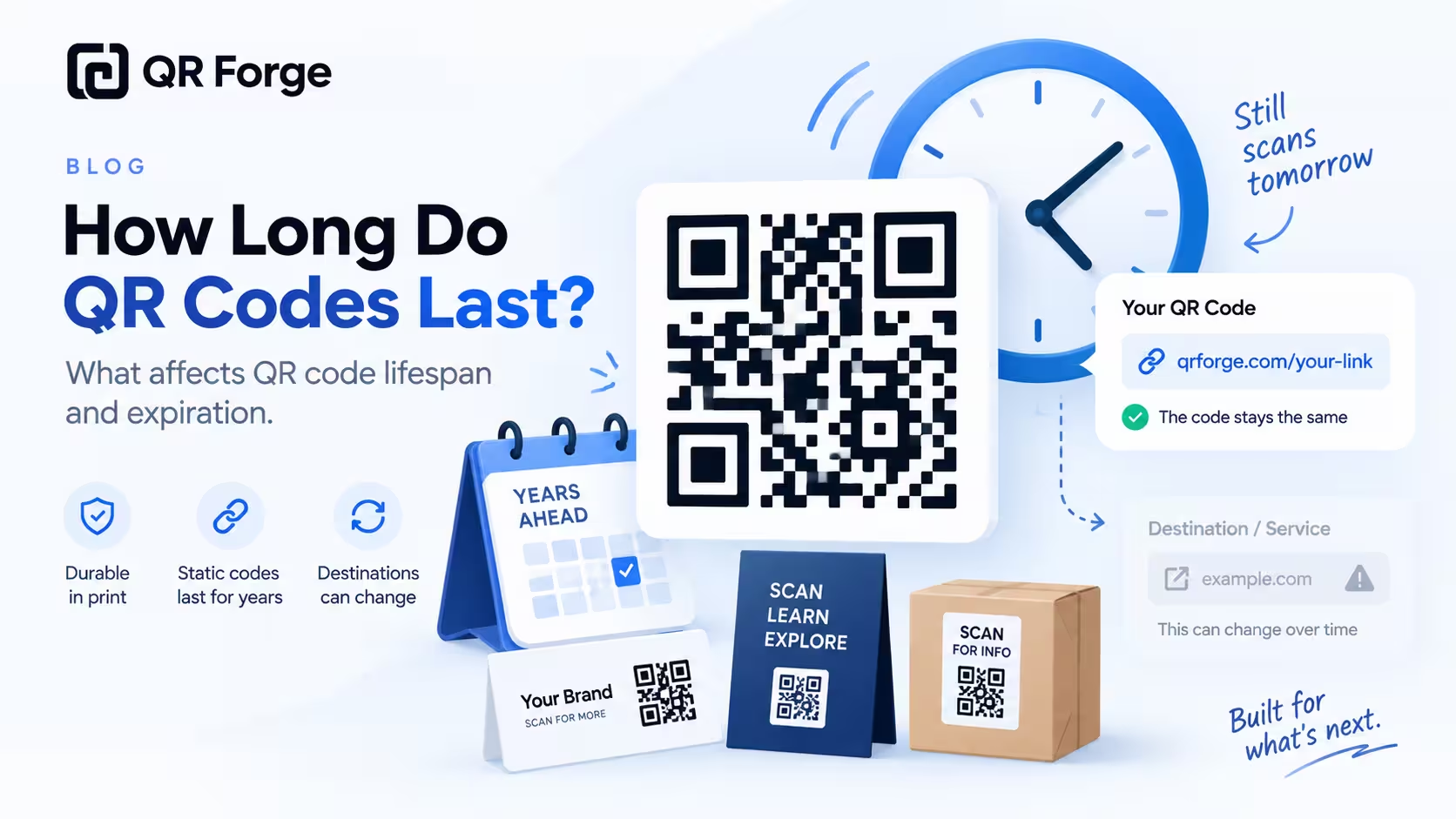
A QR code has no single expiration date. A static QR pattern does not contain a countdown, while a dynamic QR code may rely on a provider-managed redirect. In either case, the code is useful only while its image can be read and the information or destination still works.
It helps to think about three separate things: the QR pattern, the physical copy, and what happens after a scan.
What can expire or stop working?
| Part | What can happen over time |
|---|---|
| QR pattern | A static pattern does not change on its own. Damage or poor reproduction can make it hard to decode. |
| Encoded information | A phone number, WiFi password, contact detail, or other information can become outdated. |
| Destination or redirect | A web page can be removed; a dynamic redirect can depend on a provider's service and terms. |
Static QR codes
A static QR code stores its selected data directly in the pattern. The image does not need its generator to remain online for a scanner to read it. That does not keep an encoded website, phone number, or WiFi network active: those can change independently of the QR image.
For the static-specific explanation—including what happens when its payload or destination changes—see Do Static QR Codes Expire?.
Dynamic QR codes
A dynamic QR code commonly contains a URL that first reaches a provider's redirect service. The printed pattern can stay the same while the final destination is changed through that service. Continued use can therefore depend on the provider, the account, and the terms that apply to the redirect. Check those details with the service that created the code; providers do not all work the same way.
For a broader feature comparison, read Static vs Dynamic QR Codes.
How long does a printed QR code last?
There is no universal lifespan for a printed code. Paper kept indoors has different exposure from a label on packaging or an outdoor sign. Fading, abrasion, folds, moisture, glare, and low-quality reproduction can all make scanning less reliable. A digital image avoids physical wear, but can still be resized poorly, compressed, or displayed too small.
The practical check is whether the final copy can still be read at its intended size and distance. Test the exported file and, for print, a proof on the actual material and surface. Avoid treating any print-size or durability estimate as a guarantee that every phone will scan it.
For detailed print sizing and troubleshooting, see the QR code size guide and Why Is My QR Code Not Scanning?.
Examples: when a QR code becomes less useful
- A code on a product package may still decode after years, but its landing page may have been removed.
- A poster for a short event can outlast the registration page it points to. Remove or replace it when the offer ends.
- A dynamic campaign code may depend on a provider continuing to serve its redirect. Review that provider's terms before relying on it for long-term use.
- A printed sign can remain in good condition while its encoded contact or network details become outdated.
These examples separate the QR image's readability from the ongoing availability of the thing it points to.
A practical longevity check
Before producing a long-lived print run, confirm that the encoded information is correct, identify whether the code is static or provider-managed, and make sure the destination is one you can maintain. Test the final design at realistic size and distance, then periodically check that the destination still serves its intended purpose. If content moves on a domain you control, keeping the old URL working or redirecting it can preserve usefulness without changing the QR pattern.
How QR Forge creates QR codes
QR Forge generates static QR codes in the browser. A downloaded static code contains the data selected during generation; it is not an editable QR Forge redirect. If that data needs to change, create a new code. QR Forge does not promise that a printed code or its destination will remain usable indefinitely.
Frequently asked questions
Do QR codes expire?
Static codes do not have an expiry timer. A dynamic code can depend on its provider's redirect service. Both can stop being useful if the image, encoded information, or destination no longer works.
How long can a static QR code last?
The pattern has no time-based expiry. Its useful lifetime depends on whether a scanner can read the image and whether its data or destination remains current.
What affects a printed QR code's useful life?
Print quality, material, placement, exposure, and wear affect readability. The encoded information and any destination must also remain valid.
Can a dynamic QR code stop working?
Yes. The redirect may depend on a provider's systems or terms. Check the specific provider rather than assuming every dynamic service has the same expiry rules.
Create a static QR code
Generate a QR code in your browser, then test the final file and destination before sharing or printing it.